- Promo !
- -10,00 €
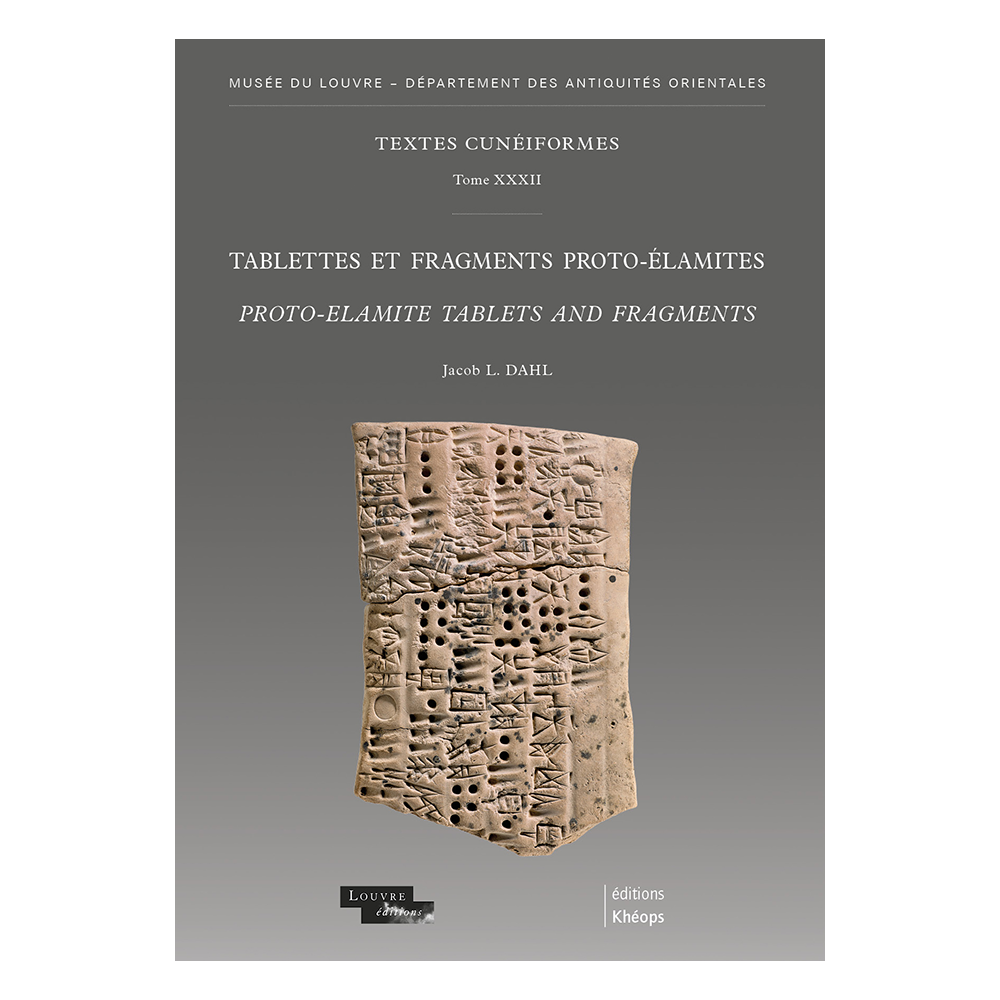
• Proto-Elamite, which emerged in Iran around 3100 BC, is one of the oldest known writing systems anywhere. Although partly derived from proto-cuneiform, invented in Mesopotamia around 3400, proto-Elamite developed in a very original way before disappearing around 2900, without immediately being replaced by any other writing system. Most of the inscribed clay tablets with proto-Elamite were discovered at the site of Susa in the late 19th and early 20th centuries. Jacob L. Dahl, professor of Assyriology at the University of Oxford, is continuing efforts to decipher proto-Elamite begun in the early 20th century, presenting here a study for researchers, students and informal learners that examines 121 unpublished tablets and fragments conserved at the Musée du Louvre, home to the world’s largest collection of proto-Elamite texts.
Prix initial : 35,00 €

Nos CGV sont conformes au Code de la consommation (articles L. 221-18 et suivants).
Jacob L. DAHL
• Proto-Elamite, which emerged in Iran around 3100 BC, is one of the oldest known writing systems anywhere. Although partly derived from proto-cuneiform, invented in Mesopotamia around 3400, proto-Elamite developed in a very original way before disappearing around 2900, without immediately being replaced by any other writing system. Most of the inscribed clay tablets with proto-Elamite were discovered at the site of Susa in the late 19th and early 20th centuries. Jacob L. Dahl, professor of Assyriology at the University of Oxford, is continuing efforts to decipher proto-Elamite begun in the early 20th century, presenting here a study for researchers, students and informal learners that examines 121 unpublished tablets and fragments conserved at the Musée du Louvre, home to the world’s largest collection of proto-Elamite texts. The edition of these tablets is preceded by a detailed introduction that traces the history of the discovery and publication, and presents the main characteristics of this writing system, as well as the difficulties of decipherment. It is supplemented by an index of proto-Elamite signs used in these texts. This volume marks the revival of the Textes cunéiformes du Louvre series launched in 1910 by François Thureau-Dangin, the last volume of which was published in 1967.
Ouvrage bilingue français-anglais – 240 pages – papier satiné 115 gr – format 210 x 297 mm – couverture en quadrichromie pelliculée avec rabats – EAN : 9782916142159.

Fiche technique
Références spécifiques
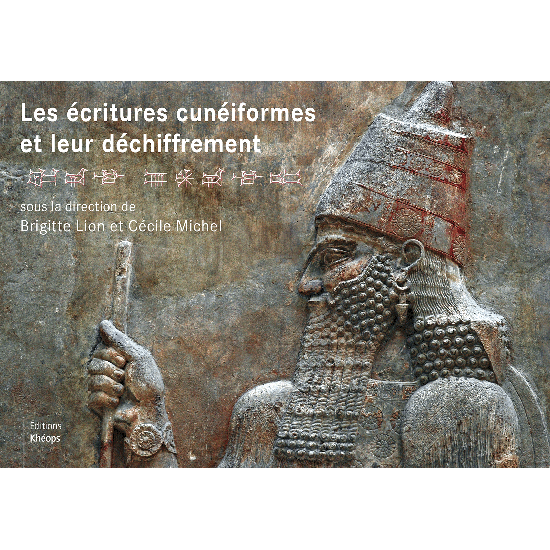
• En 1857, la Royal Asiatic Society de Londres confia sous scellés une copie d’inscription cunéiforme, tout juste découverte à Aššur, aux Anglais E. Hincks, H. Rawlinson et F. Talbot ainsi qu’au Français J. Oppert. Les traductions de ces savants, lues le 25 mai, concordaient suffisamment pour que l’écriture cunéiforme syllabique fût déclarée déchiffrée. En 2007, l’équipe Histoire et Archéologie de l’Orient Cunéiforme (laboratoire ArScan, UMR 7041 du CNRS) a organisé une exposition pour célébrer cet anniversaire. Cet album, édité à cette occasion, présente les différentes étapes de la redécouverte du Proche-Orient ancien et des déchiffrements des écritures cunéiformes. Celles-ci furent utilisées pendant plus de trois millénaires dans une vaste zone du Proche-Orient, englobant non seulement la Mésopotamie, mais aussi les régions voisines, jusqu’à l’Égypte, la Turquie et l’Iran.
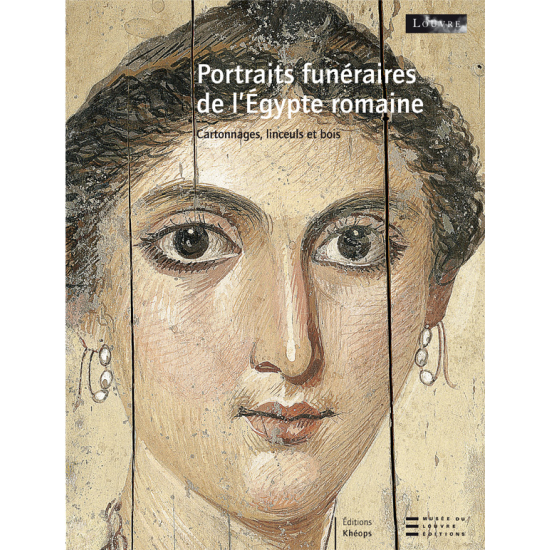
Ce catalogue présente les portraits funéraires de l’Égypte romaine peints sur toile, sur bois et en cartonnage, et complète le premier tome, paru en 2004, consacré aux masques en stuc. Le musée du Louvre possède une collection riche et variée, du portrait en pied figuré sur un linceul de presque trois mètres de haut, à celui esquissé sur une étiquette de momie, haute d’une dizaine de centimètres. La diversité caractérise, non seulement les formats, les matériaux, la facture picturale et graphique mais aussi et surtout les portraits des défunts eux-mêmes, tous singuliers. Divers chapitres précèdent les quatre-vingt-trois notices composant le catalogue : une introduction qui montre l’enracinement des œuvres dans la tradition funéraire pharaonique, un historique de la collection, l’identification des essences de bois et des pigments utilisés pour les portraits dits « du Fayoum », ainsi qu’une étude des inscriptions grecques et démotiques.
Prix initial : 55,00 €
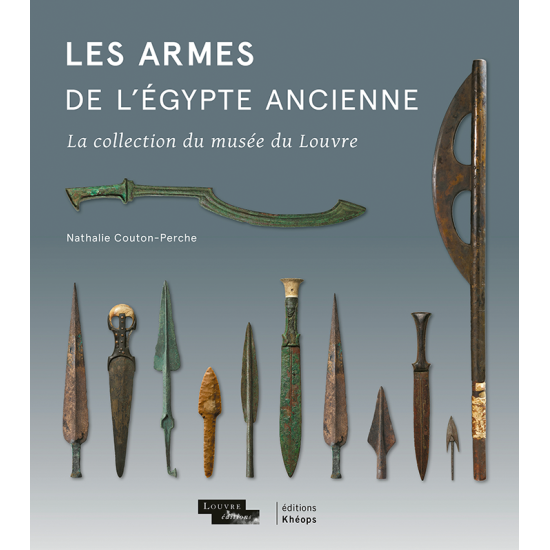
• Dès son ouverture en 1827, Jean-François Champollion publia les premières armes du musée égyptien qu’il venait de créer. Du Néolithique jusqu’à l’époque romaine, les armes de la collection du Louvre présentées ici forment un ensemble de près de quatre cents numéros que l’on a étudié du point de vue du matériau, de la technique de fabrication et de l’usage que l’on en faisait. À chaque fois que nécessaire, les représentations et la symbolique qui pouvaient y être attachées ont été convoquées. La taille de la collection, la diversité des armes qu’elle compte et la période historique couverte donnent à voir les ressources dont disposaient les Égyptiens de l’Antiquité pour s’armer, depuis l’époque où ils étaient des nomades chasseurs-cueilleurs ou les sujets sédentaires, agriculteurs-éleveurs, de l’un des états antiques les plus centralisés qui fût : silex et pierres dures, os, ivoire, bois, roseau, bronze ensuite.
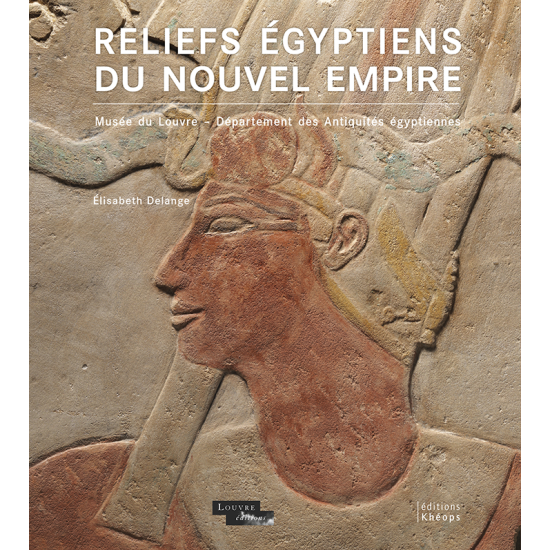
• Les reliefs égyptiens du Nouvel Empire représentent la fine fleur du département des Antiquités égyptiennes du musée du Louvre, objets phares en raison de leurs dimensions comme de leurs qualités esthétiques qui culminent à cette période. Celle-ci comprend la XVIIIe dynastie et l’époque ramesside des XIXe et XXe dynasties. Les noms bien connus des pharaons résonnent dans les mémoires, que ce soient les Thoutmosis, les Aménophis, ainsi que la lignée des Ramsès. De même, les monuments des hauts fonctionnaires de cette époque de prédilection révèlent quelques chefs-d’œuvre remarquables et universels. Parmi ces reliefs, certains sont connus du public, tels que le « Séthi Ier et Hathor » rapporté d’Égypte par J.-Fr. Champollion, les colonnes de granite monumentales qui ornent la Galerie Henri IV, le fragment de paroi très coloré du temple de Ramsès II à Abydos…
Prix initial : 75,00 €
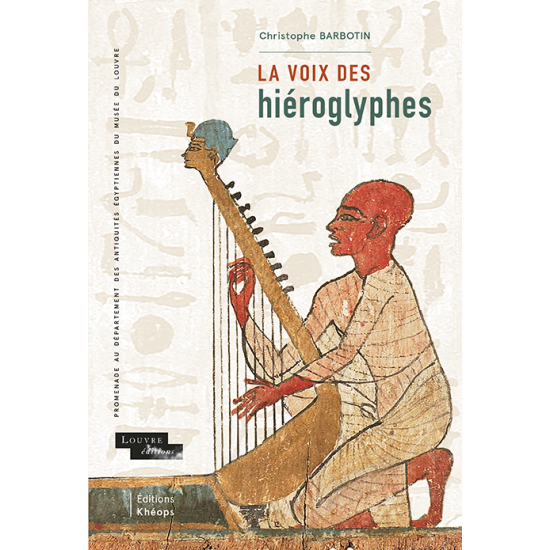
À lire et entendre tout ce qui se dit et s’écrit sur l’Égypte ancienne, on pourrait se représenter la Vallée du Nil comme une terre réservée aux dieux et aux pharaons, aux temples et aux cimetières. Et pourtant… si l’on écoutait la voix des Égyptiens eux-mêmes plutôt que de parler à leur place ? Cet ouvrage, le premier jamais publié dans son genre, vous propose donc de les rencontrer directement au gré d’une promenade dans les salles égyptiennes du Louvre. Vous y lirez, en suivant le texte original sur l’objet, les traductions de plus d’une centaine de textes les plus divers, depuis l’ardoise d’écolier jusqu’au sarcophage de Pharaon. Un peuple aussi bavard et aussi gai n’aurait-il pensé qu’à la mort ? On peut en douter… Christophe Barbotin est Conservateur général au département des Antiquités égyptiennes du musée du Louvre et enseigne l’épigraphie égyptienne à l’École du Louvre. Didier Devauchelle est Professeur d’égyptologie à l’Université Charles de Gaulle-Lille III.
• Proto-Elamite, which emerged in Iran around 3100 BC, is one of the oldest known writing systems anywhere. Although partly derived from proto-cuneiform, invented in Mesopotamia around 3400, proto-Elamite developed in a very original way before disappearing around 2900, without immediately being replaced by any other writing system. Most of the inscribed clay tablets with proto-Elamite were discovered at the site of Susa in the late 19th and early 20th centuries. Jacob L. Dahl, professor of Assyriology at the University of Oxford, is continuing efforts to decipher proto-Elamite begun in the early 20th century, presenting here a study for researchers, students and informal learners that examines 121 unpublished tablets and fragments conserved at the Musée du Louvre, home to the world’s largest collection of proto-Elamite texts.
Prix initial : 35,00 €